

A lot can happen in five minutes.
When an incident commander arrives on scene, they are stepping into a dynamic environment that is already in motion. Dispatch information provides a starting point — a location, a call type, or even notes from the reporting party — but the reality on the ground often diverges rapidly from those expectations.
Smoke might be showing from a different side of the structure, traffic patterns may block access, or the scale of the incident may be larger than anticipated. The IC needs small, digestible bites of info — and needs them in the moment.
Biggest Priorities
Command is fundamentally an exercise in managing uncertainty.
In the opening minutes, a commander is trying to answer three questions simultaneously:
- What do I have?
- What is happening right now?
- What is going to happen in the next five minutes?
The answers to these questions are rarely handed over in a neat package. Instead, they arrive in fragments. A size-up from the first-in engine gives a snapshot of the A-side. A frantic bystander offers a detail about occupancy. A distinct change in smoke color suggests a change in fire behavior. Meanwhile, other units are awaiting assignments.
In traditional workflows, this is often managed with a tactical worksheet, a whiteboard, or simply by memory.
While these methods are time-tested and reliable to a point, they depend on the individual officer’s ability to maintain a mental map of the incident while simultaneously communicating on the radio and processing new inputs.
When data lives in different places, it takes significant mental energy just to keep the picture unified. That is energy that could otherwise be spent on forecasting fire behavior or planning the next tactical move.
Because information is incomplete, the first five minutes are about rapid prioritization.
Experienced commanders know they cannot solve the entire problem immediately. Instead, they focus on stabilizing the chaos. This process involves a constant shifting of focus.
First, it is life safety and immediate rescue. Then, it shifts to water supply, exposure protection, and ventilation profiles. As the incident expands, the priority shifts again to accountability and resource management.
The pressure comes from the fact that these priorities often conflict. A rescue operation requires immediate staffing, but neglecting to secure a water supply or establish a Rapid Intervention Team introduces severe risk. The commander must weigh these trade-offs in seconds.
Decision-making in this environment is rarely about choosing between a right and a wrong option. It is usually about choosing the best option based on the limited visibility available.
The goal is to gain control of the tempo of the incident — to shift from reacting to getting ahead of the fire with suppression efforts and stop its progress. This transition from reaction to proaction is the hallmark of a successfully managed scene, and it hinges entirely on how quickly the IC can organize the chaos into a structured plan.
What Improves With a Shared Operational Picture?
The friction points in the first few minutes often stem from a lack of shared perspective. The Incident Commander knows the strategy, but do the company officers? The engine on the C-side sees a hazard, but does the truck on the roof know about it? When everyone is operating off their own mental map of the incident, coordination becomes difficult. Radio traffic increases as units ask for clarification or repeat information.
Questions regarding who has the nozzle, if the primary search is complete, or where the second alarm is staging clog the airwaves, adding to the noise and slowing down the operation.
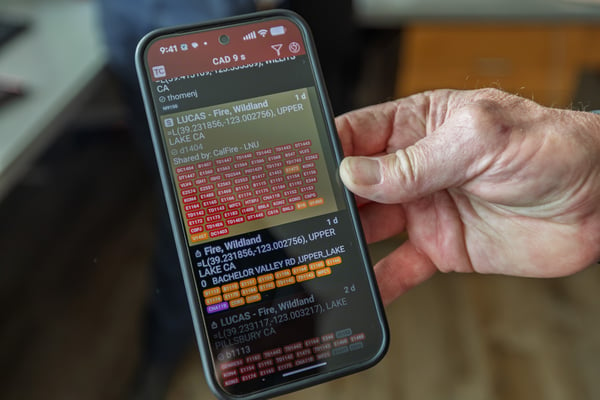
A shared operational view moves the incident status from being a private thought process in the Incident Commander's mind to a visible reality that can be referenced by command staff and dispatch. This shift is critical for continuity. When the operational picture is visible and shared, it supports the natural evolution of the incident.
If the incident grows and a chief officer arrives to assume command, the transfer is seamless. They do not need a five-minute verbal explanation to understand the resource deployment; they can see it. Dispatchers can see benchmarks being met in real-time without needing to query the commander on the air.
This clarity reduces the cognitive load on everyone involved. The officer does not have to memorize the location of every unit because the information is organized logically in front of them. It frees up mental bandwidth to focus on the fire itself and the safety of the crews working inside.
As the incident evolves from a fast attack mode to a defensive operation or a complex overhaul phase, information gaps can reappear. Personnel changes, the introduction of mutual aid agencies, or the expansion of the command structure into branches and divisions can reintroduce confusion.
Maintaining a continuous, updated record of assignments and benchmarks helps ensure that everyone remains on the same page, regardless of when they arrived or which agency they represent.
Practical Habits: How To Improve Your Operational Picture
Want to manage the uncertainty of the first five minutes and build a stronger operational picture?
Start by adopting specific behaviors that reduce friction.
- Confirm incident objectives out loud, even if just to the driver or aide, and restate them clearly whenever incident benchmarks change to ensure the immediate team is aligned.
- Log assignment changes at the exact moment they happen rather than waiting for a lull in the action, as deferred recording often leads to gaps in the incident history.
- When mutual aid units arrive, confirm their staging location and designate a specific person to track their arrival before they are committed to the tactical environment.
- Establish a rhythm for updates, such as every time a benchmark is met or a division is added, to force a mental reset and ensure the current plan matches the current conditions.
- Visually group units by their assignment rather than their arrival order on any tracking sheet or board to make it easier to see span of control and tactical gaps.
By organizing critical data and maintaining a clear view of the operation, Incident Commanders can make decisions based on a shared understanding rather than a fragmented collection of radio calls and notes. When clarity is prioritized early, the transition from reacting to the incident to controlling it happens much faster.
Want to see how agencies are using Tablet Command in the field?
See why Tablet Command is trusted by thousands of departments across North America. Click here to schedule a demo and we’ll walk you through how it works.